
Ensurnig Safety and Performance of Liquefied Gas Units
GTT Inside N°35 | February 2026
Across the Lifecycle
ENSURING SAFETY AND PERFORMANCE OF LIQUEFIED GAS UNITS
With more than 60 years of field experience, GTT’s expertise extends well beyond engineering and design. It also encompasses highly specialised know-how that supports clients and stakeholders during one of the most critical phases in a vessel’s lifecycle: initial LNG operations.
During this stage, all equipment, including compressors, heaters and insulation, are tested under real conditions, through the full spectrum of operations the vessel will perform throughout its service life: insulation cool-down, tank loading and unloading, and cargo transfers between tanks. At this stage, design assumptions are confronted with operational reality, and experience proves decisive.
Over the years, GTT has built an unrivalled operational track record with more than 14,000 cumulated tank-years for Mark III and over 12,900 for NO96. GTT has attended more than 1,400 refits dedicated to cargo tank inspection and has supported the commissioning of over 250 units since 2013. This experience concerns LNGCs1, FSRUs2, FLNGs3, VLECs4 as well as container vessels, cruise ships, bunker vessels and onshore storage tanks. Notably, every FLNG equipped with GTT membrane systems has benefited from GTT’s presence at start-up.
Operational expertise at the heart of commissioning
GTT relies on a dedicated in-house gas commissioning team composed of former seafarers with extensive experience in gas operations, including gas engineers and chief officers. These specialists work in close coordination with shipyards from cargo tank closing through to vessel delivery, ensuring that GTT systems are tested and operated in strict accordance with design specifications, technical documentation and procedural requirements established during the engineering phase.
Given the highly sophisticated nature of this technology, commissioning and testing activities may occasionally bring to light unforeseen operational challenges. The most critical areas of attention typically include:
- Pressure management in cargo tanks and insulation spaces: deviations identified during tightness tests, such as improper return to atmospheric pressure following vacuum conditions or inadequate safeguards during tracer gas injection, as well as incorrect settings of the integrated automation system during operations, may result in overpressure scenarios with potential technical and schedule implications.
- Inerting and preservation of cargo tanks and insulation spaces: inadequate atmospheric control may result in damage to the cargo containment system, thereby necessitating further investigation and the implementation of corrective measures.
To support on-board teams, GTT’s gas commissioning specialists deployed on board are supported by engineering experts based at GTT’s head office. Each decision is underpinned by dedicated studies, including comparison with data from the fleet, simulations and risk assessments aimed at defining acceptable operating thresholds and evaluating the potential consequences of any defect or improper operation.
Securing commissioning from preparation to start-up
GTT’s commissioning assistance covers all critical phases: preparation of commissioning, commissioning, and start-up with gas.
During the preparation phase, before any fluids are introduced inside the cargo tank and insulation spaces, GTT works closely with shipyards and stakeholders to secure future operations. This includes:
- Reviewing all the testing procedures related to the cargo tanks, cryogenic piping and insulation spaces such as cold tests of the cryogenic piping, insulation space commissioning, tank preservation after closing, gas trials, etc.
- Verifying the line-up and setting of the equipment and automation as per design documents.
- Checking P&IDs, alarms and safety logic as per cause-and-effect diagram
- Controling the equipment readiness thanks to regular patrols
All observations identified during patrol activities are systematically documented and promptly communicated to the shipyard via the Daily Patrol Report (DPR).
Regular coordination meetings with shipyard commissioning teams ensure that corrective action plans are implemented to confirm the expected configuration.
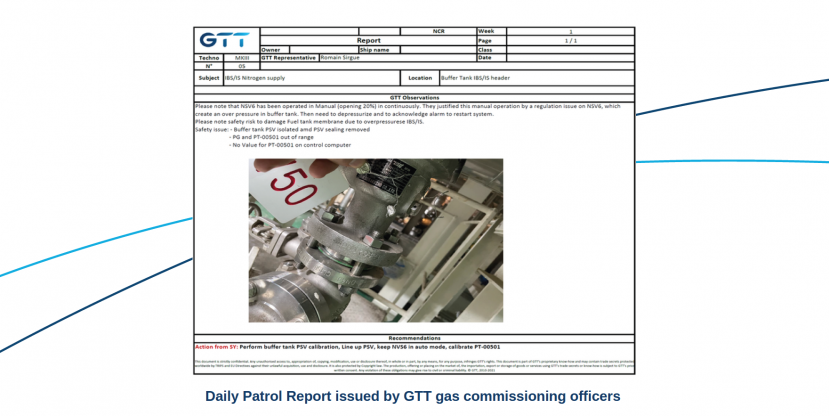
As a result of this structured methodology and sustained technical oversight, commissioning activities are meticulously prepared, ensuring that gas trials are conducted under strictly controlled and safe conditions.
Supporting critical operations during gas trials
As already mentionned, the commissioning and start-up are critical project phases during which key decisions must be taken quickly to preserve operational safety and avoid schedule delays due to cargo operation mishandling.
GTT provides 24/7 support to shipyard and ship-owners from inerting and introduction of the first LNG (gassing-up, cool-down, submerged pump testing, etc.) to steady-state operations and decommissioning. During the operations, our gas commissioning officers regularly control the cargo tank parameters and conditions, the appropriate pressure management, the situation of instrumentation, and the compliance of operations with testing procedures.
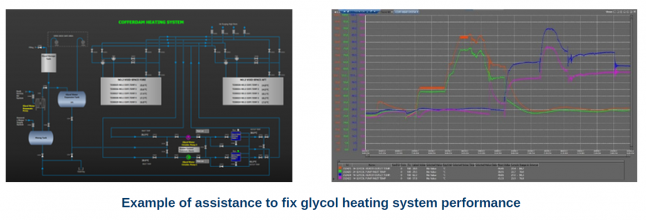
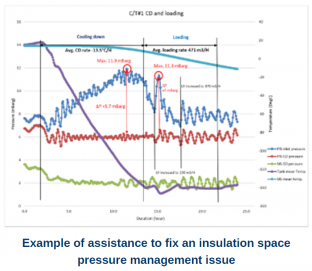
Our gas commissioning officers are also supporting the shipyard and ship-owner teams when non-nominal operations are encountered or deviation from the initial testing procedures arise. For example, our teams have supported critical operational aspects such as cofferdam heating system performance and insulation space pressure management.
_________________________
During gas trials, it has been observed, for example, that the maximum temperature of the glycol heating system did not exceed +55°C, whereas the design operating setpoint was +90°C. Our assistance was requested to resolve the issue. All possible causes (pump and heater capacities, piping installation and length, system set points, alarms and safety) were listed, tested and properly investigated. A detailed due diligence review identified excessive pump flow and an incorrect regulation set point.
Close cooperation then enabled proper system configuration, resulting in performance in line with expectations. This assistance is essential to secure the timeline of the gas trials and to ensure safe operations knowing that the cofferdam heating system is essential to maintain an acceptable temperature range of the hull steel structure as per IGC requirements.
Appropriate pressure management is key for membrane technologies. Our gas commissioning officers are regularly asked to fix nitrogen header and insulation space pressure regulation so that it returns to the acceptable operating range.
Sharing knowledge to build long-term performance
Beyond technical assistance, GTT’s commissioning teams actively share latest state-of-the-art in GTT technologies and LNG operations with shipyard personnel and ship crews. Training sessions and on-the-job guidance cover key areas such as cargo handling system, gas operations, safety practices and environmental performance.
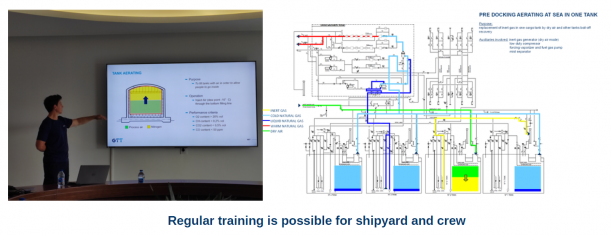
By integrating advanced engineering capabilities, extensive operational know-how and close partnerships with shipyards and shipowners, GTT ensures that liquefied gas units are delivered in full compliance with the highest standards of reliability, safety and performance. From preparation to start-up, GTT’s commissioning support not only secures immediate performance but also establishes the foundations for long-term operational excellence across the liquefied gas fleet.
------
1 Liquefied Natural Gas Carriers
2 Floating Storage and Regasification Units
3 Floating Liquefied Natural Gas
4 Very Large Ethane Carriers