LNG as Fuel
To address the challenge of climate change, GTT is innovating to offer cutting-edge technologies which enable the maritime sector to reduce its impact as much as possible.
Liquefied natural gas (LNG) is an essential transitional energy source for ship propulsion, reducing emissions and improving efficiency.
As a responsible choice, until a more sustainable energy system and its supply chain are ready, LNG paves the way for carbon-free shipping.
Since 2008, the International Maritime Organisation has launched measures to reduce pollutants, which are gradually coming into force on a global scale.
- reduce CO2 emissions per transport activity, on average for all international shipping, by at least 40% by 2030 and by 70% by 2050 compared to 2008 ;
- reduce the total volume of annual GHG emissions by at least 50% by 2050, compared with 2008.
LNG as Fuel
BENEFITS
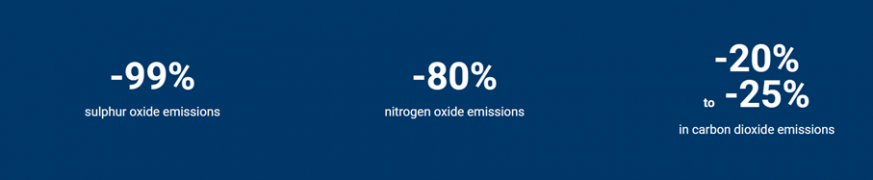
Using LNG as fuel immediately reduces a ship’s overall emissions. By recovering the little LNG that evaporates and improving the efficiency of ships, we are offering a compliant and competitve solution.
Technology available for every shipping segment and LNG volume
From container vessels and cruise ships, to tankers and bulkers, LNG is an alternative fuel solution suited to all kind of ships. This solution is flexible, even throughout the vessel’s lifespan with conversion systems.
Membrane tank volumes can vary from 1,000 m3 for passenger ships, to 10,000 m3 for tankers, and close to 20 000 m3 for very large container vessels.
GTT is also offering solutions for all applications of the LNG supply chain :
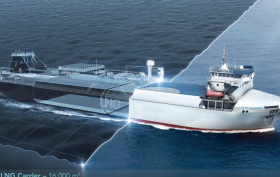
- Bunker barges and vessels used to bunker ships in every kind of navigational areas (inland waters, coastal, seagoing, shallow draft, etc.);
- Small and medium-capacity LNG carriers used as refueling vessels (used for LNG ship-to-ship transfers) and suitable for inland waterways and coastal zones;
|
Specificities of membrane tank |
Advantages of membrane tank |
Gain in |
|
Flexible tank geometry |
Saving DWT |
Volume |
|
Low weight |
Increased deadweight gain |
Autonomy |
|
Highly optimised tank volume |
Extended autonomy |
Flexibility |
|
Low guaranteed boil-off rate |
Pressure rise > 30 jours with minimum consumption |
Security |
|
Low heat capacity |
Rapid cooling of tanks |
Energy efficiency |
Turnkey solutions to ease the transition to LNG
Consulting
GTT provides the assistance required to advise every ship-owner, whether on the tank itself or on the FGHS (Fuel Gas Handling System), thanks to its recognised expertise and experience. We can advise you at every stage of your project.
|
Pre-project |
Project and construction |
|
|
Supporting your requirements
Emergency responses
Our emergency response service HEARS is available 24/7.
Gas leakage, water ingress in LNG tank insulated spaces, LNG spillage on deck, emergency departure from terminal, prolonged loss of nitrogen production, prolonged loss of cofferdam heating : Common emergency situations are covered.
An Emergency Preparedness Program (EPP) can be scheduled to enhance the efficiency and responsiveness of teams, tailored to the specific needs of LNG tanker operations.
Maintenance
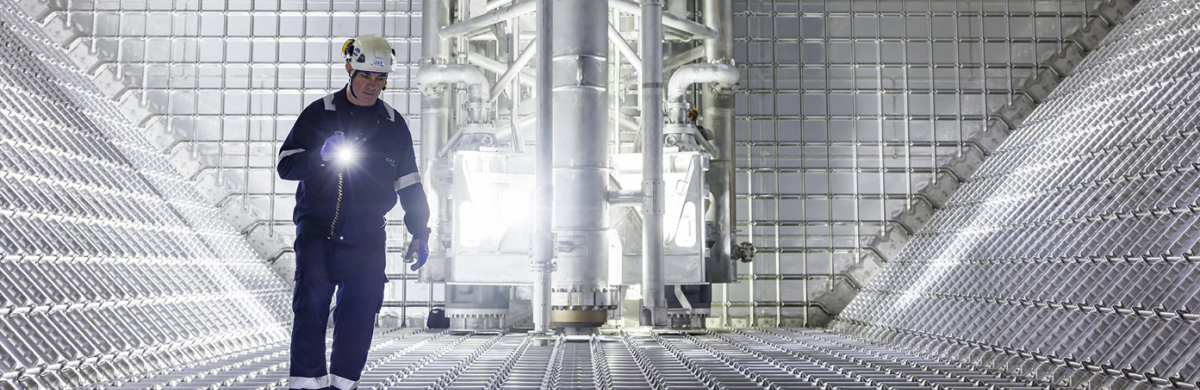
GTT provides on-site technical support for inspection, maintenance, and repair of tanks.
This maintenance is carried out in collaboration with a global network of authorised repair yards, trained and qualified by our group.
We offer maintenance services throughout the vessel’s lifespan, averaging around 40 years.
Engineering
We offer studies on highly specialised technical issues.
These studies enable the adaptation of projects to enhance the operational flexibility, performance, and management of operational risks for vessels.
Support through our specialist subsidiaries
Training
- Catalog of LNG-Adapted Courses
- LNG and Liquefied Gas Operation Simulaton
More information: www.gtt-training.co.uk
Digital solutions
- Enhancement of vessel navigability and efficiency
- Optimisation of operations
- Decision support software
- Automation of reporting
More information: www.gttmarine.fr
Maintenance & Testing
- Membrane tests
- Thermal assessment of membrane integrity (TAMI)
More information: www.cryovision.fr
LNG-fuelled ships scanner