Cruise vessel
To address the challenge of climate change, GTT is innovating to offer cutting-edge technologies which enable the maritime sector to reduce its impact as much as possible.
LNG as Fuel Benefits
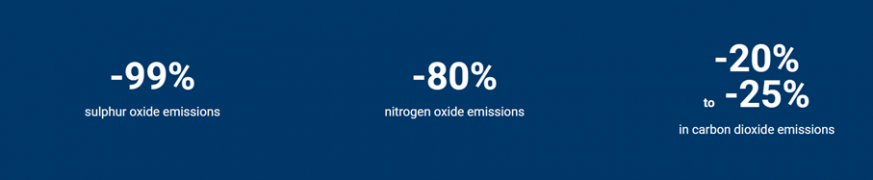
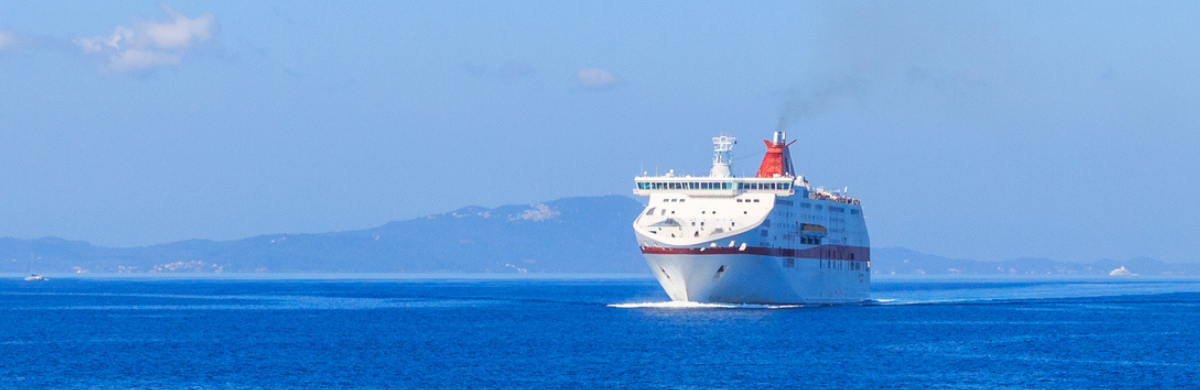
LNG-Fuelled Cruise Ships
Features and benefits of GTT technology for cruise ships
Technology
Compatible with Mark III technology.
GTT membrane containment systems benefit from an undisputable track record with over 60 years of experience at sea.
Reliability
Highly reliable solution thanks to two liquid tight barriers and continuous monitoring of the insulation system.
High thermal performance
Low and guaranteed BOR performance
Mark III: 0.435 %V/day for a 3,000 m³ tank
Scalable design
Scalable design adaptable to any hull and operational profile.
Optimised hold sace
More cabins thanks to optimised footprint.
Useful spaces are maximised thanks to Mark III technology that can be designed in prismatic shapes, fitting any fuel hold space.
- More LNG fuel tank volume = increased autonomy on LNG
- Smaller LNG fuel tank footprint = more cabins and technical spaces
Design pressure up to 1 or 2 barg
Design pressure of the tank can be adapted or increased:
- Extended holding time to cover idle, shutdown, or emergency situation
- Ability to bunker a wider range of LNG qualities and temperatures
Standard design pressure: 700 mbarg
Compatibility
Containment system multi-fuel ready (NH3 / MeOH) and fully compatible with bio-LNG and e-LNG.
Compliance
GTT Membrane technology is fully compliant with IGF and approved by Classification societies.
Case Study: comparison between membrane tanks vs. Type-C tanks
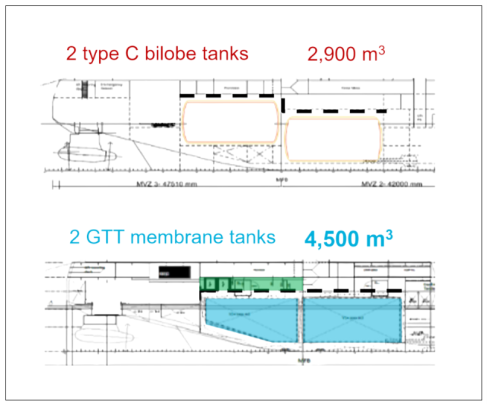
- For the same footprint, Mark III LNG fuel tank capacity is +30% to +100% higher than type-C tanks
- Illustration on Ponant’s Le Commandant Charcot vessel: type-C tanks were initially considered for this project, but this solution showed its limits as the type-C tanks could not reach 3,000 m3. Instead, Mark III tanks could easily reach 4,500 m3, while even saving an additional deck space for more technical spaces or cabins
Compact Tank Connection Space (TCS), using innovative flush domes with a simplified design to reduce the footprint, saving space for cabins.
Boil-Off Gas (BOG) Management:
- Pressure accumulation is effectively managed within the tank’s 2 barg design pressure, which provides ample holding time.
- Auxiliary boilers are utilised if required during idle and emergency situations.
Reference
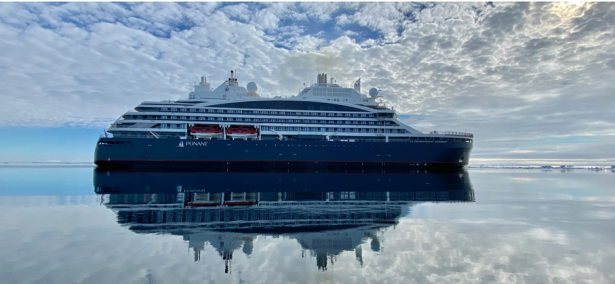
Ponant - Le Commandant Charcot
Ponant, a luxury cruise operator, launched its first electric hybrid cruise ship with LNG propulsion Le Commandant Charcot in 2021.
The cruise vessel is equipped with two Mark III LNG fuel tanks, offering a total capacity of 4,500 m3.
Built by Vard, Ponant’s expedition vessel is capable of making its entire routes using LNG.
Compared with other LNG fuel tank technologies, the ship LNG fuel autonomy has been increased by more than 50% while saving more than 250m² for technical spaces.
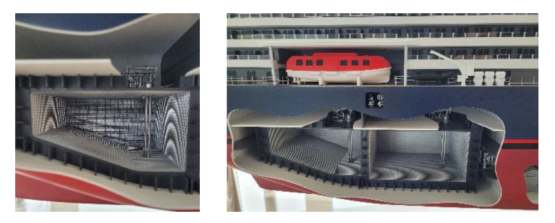
LNG-fuelled ships scanner